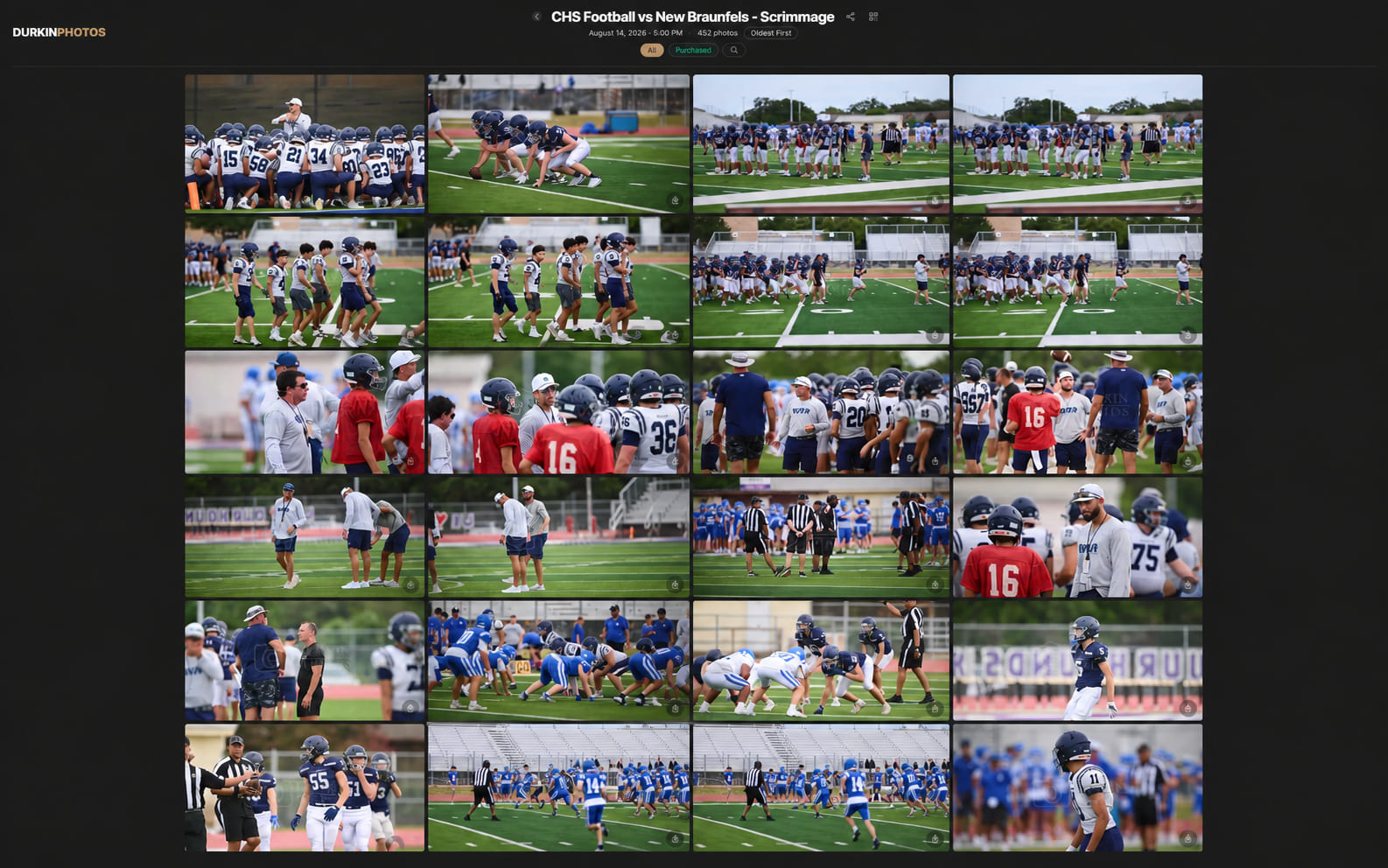
Built for live delivery
Capture, processing, and gallery delivery work together so photographs can reach families while the event is still happening.
We built custom tools for the moments that matter most: athletes reviewing a media-day session on site, families seeing a game while it is still being played, and programs getting a dependable delivery experience all season.
Each athlete gets a QR card at check-in. Cameras feed photos to our on-site system the moment the shutter fires. It reads the QR from inside each frame, looks up the player, and pushes the photo to a per-player iPad — typically within a few seconds.
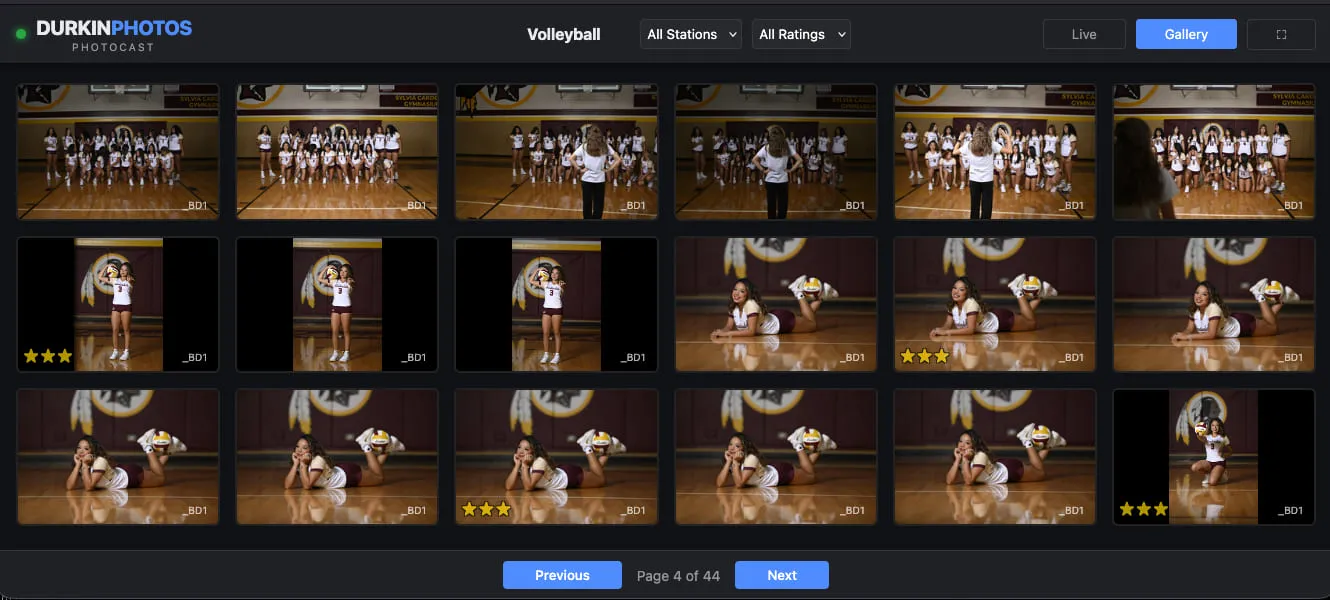
Cameras upload each selected frame over cellular the moment we shoot. The cloud pipeline picks it up, a custom styling step enhances the image and tags content, watermarks and youth-safety rules are applied automatically, and the result is published to the event's live gallery. The result is a fast, controlled workflow built around the event and the people in it.
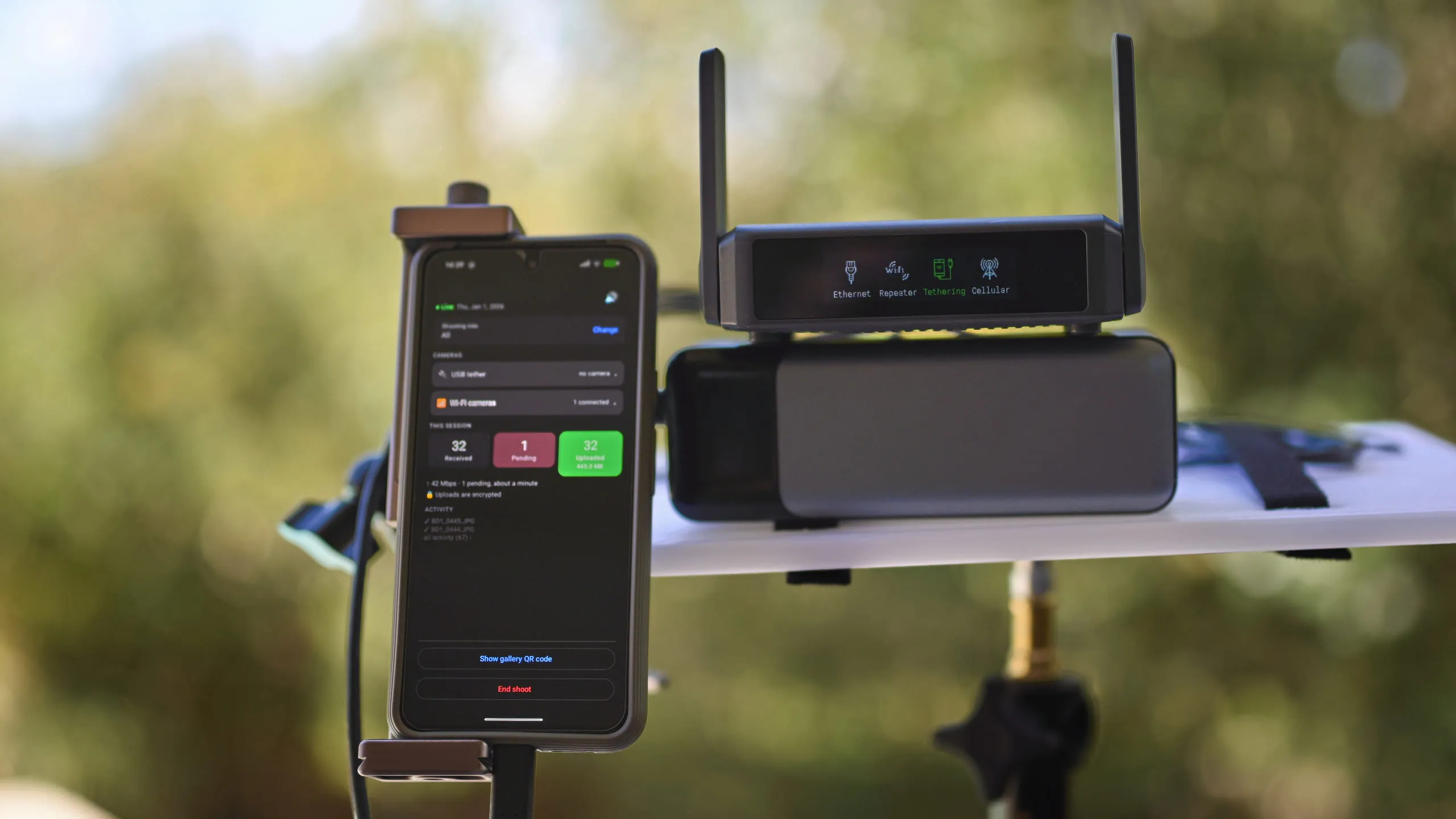
Capture, processing, and gallery delivery work together so photographs can reach families while the event is still happening.
Event-specific access controls, private-by-default youth galleries, and clear removal paths are part of the delivery experience.
The same team understands the camera, the event, and the delivery path — so support does not get handed between vendors.
Schedule a call — we'll talk through the event and the pipeline.